


I have always personally felt as though my connections to others are closest immediately after repairing a relational rupture. It’s almost as if whatever it is that usually occupies the space between two people has momentarily been stripped away and you become psychologically naked to one another. I recently heard someone describe Secure Attachment as simply “a deep trust that repair will always follow rupture.” I’ve been meditating on that for some time and believe it’s true.
First and foremost, let’s expose a hard truth: every relationship, no matter how strong, will experience conflict and rupture. That, in itself, is not a failure; it’s a feature of human connection. We are nobody’s clone and with any difference, conflict is inevitable. The idea that love, parenting, or friendship is about seamless harmony is a fantasy that ignores the reality of our fallible nature. What matters to the success and maintenance of a connection is not whether rupture occurs in the first place—because it always will—but whether there is adequate repair after the fact. That is what separates the surface-level connections from those that transform us forever.
We are a species full to the brim of unconscious contradictions. We shout when we want to make peace. We withdraw when we want to connect. We criticise when we wanted to be supportive. We listen to defend instead of to understand. These missteps pile up until we don’t even know where to begin fixing things, so we do nothing. And “nothing” becomes the default response in too many relationships—pressing on while resentment festers like an undiagnosed infection.
What makes true repair so excruciatingly difficult is that it must involve a moment of complete defencelessness. You cannot apologise and defend yourself simultaneously. You must give the right to self-defence up in that moment. Repair requires you, in a way, to put yourself at the mercy of the person whom you hurt and failed to show mercy unto you. “Im sorry I disrespected your parents, but I only did it because…“ is not an effective apology and it most certainly is not repair. There will always be a place for self-advocacy but it does not belong a conversation dedicated to repairing a rupture caused by your behaviour. “Im sorry I disrespected your parents, I know that hurt you deeply and that you felt disrespected by me personally as a result. I will work on my reactions to make sure I never do that again“ is repair. It is to say to say in one way or another, “I failed you here, and I want to make it right.” But it is not easy to be the villain.
Fundamental attribution error is a cognitive bias the vast majority of us carry into every single relationship. It is the acknowledgement of my complexity and nuance but an inability to offer others the same understanding. I am elaborate and complex but you are simple. If I am in a bad mood and yell at my partner it is a result of a plethora of contextual factors—there was traffic on the way home, I have late assignments due at work etc.— but if my partner is in a bad mood and yells at me it is because they are rude. It is not so much narcissism as it is the default human condition. Repair demands that we breakthrough this cognitive bias in order to truly empathise with the other. This is why relationships are rarely healed at the level needed, and why the majority of couples simply press on in relationships full of repressed resentment and contempt and unresolved issues.
Relationships—parental, romantic, platonic—are laboratories for growth. They challenge and provoke you and they expose you to your blind spots in ways you could never accomplish on your own (read From Half to Whole: Why Marriage has to be a Challenge for more on this). Relationships challenge you to grow past the flaws you’d otherwise ignore. In any conflict, regardless of who’s in the right or wrong, your partner, friend, or child is showing you something about yourself. You either take the bait and get defensive or simply pause long enough to consider what they see and if it’s worth working on.
This is what makes relationships transformational. They are a delicate but beautiful dance between you and the parts of you that you refuse to acknowledge. They’re not just places where we share love or comfort; they’re crucibles where we refine ourselves. Every rupture is an opportunity to grow, and every repair is an act of returning—not just to each other, but to the best version of ourselves.
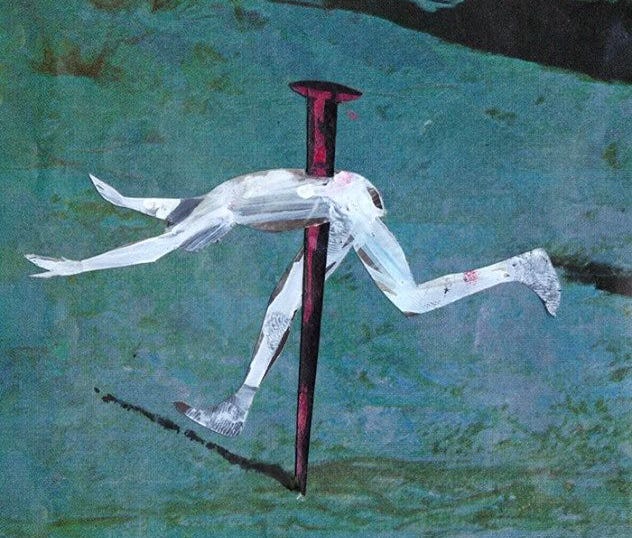
My wife and I have what we call the terrible 3 am. This refers to a moment early in our marriage. It was one of those smoldering arguments, never quite turned mean or even loud, just a lot of mutual dissatisfaction and recrimination. By about 3 am we were sitting at our kitchen table, exhausted and sad. I said something like "well, I guess we're just done then?" She said, "I guess so" and we just say there. Then this old song from the 70s that we both love came on the radio and she started to cry and said "but I don't WANT to break up". I started to cry and said that I didn't either. That was like 28 years ago. We've had a few moments like that and have always come back stronger.
We have advised other couples that sometimes it is necessary to consider the real possibility that the relationship may have reached its' natural conclusion. This is such a terrifying thought to most couples, especially those really in love, that they do everything in their power NOT to entertain it. Much easier to just keep saying "If YOU would just change, things will be better". This is where the years of resentment build up until it really IS over.
There IS a such thing as an irreconcilable difference (this is a second marriage for both my wife and I). But if we aren't willing to face that fact, we make it inevitable. This is how it is in all relationships. Thank you for this. I always enjoy what you write and your sensitivity to the fragile and foolish human nature.
"You must give the right to self-defence up in that moment. Repair requires you, in a way, to put yourself at the mercy of the person whom you hurt and failed to show mercy unto you." This is so profound and enlightening but so damn difficult to sacrifice when it happens. I need to work on that.