


I sin, and cannot bring myself to repent. I imagine God sulking, nursing a grievance. Sometimes I picture Him angry, seething with rage. I decide that I have sinned more times than even He can bear to count, more times than His patience, or my idea of His patience, could withstand. I assume He has learned better by now, that my repentance has grown transparent, that there is no point in offering it again. For me, a friend only has to lie once, maybe twice, for my own patience to wither. And so, I assume He holds a grudge. I project onto the Most High all of my lows.
Perhaps I was told too often of His wrath and too little of His grace. Humans limited to the language of mortals, attempted to describe the ineffable to me, and left me grasping at shadows. Thus, it seems, I lent God my habits. Him keeping count, learning my patterns, growing tired of my pathetic apologies. I assume He recoils the way I do, that He withdraws affection the way I do, that disappointment hardens Him as it hardens me. I give Him my pettiness, my suspicion, my fatigue with being wronged. I teach Him to remember the way I remember, to grow cold the way I grow cold. In making Him human enough to understand Him, I make Him too human to forgive.
I have made Him intelligible to me, which is to say: small. I don’t doubt His existence; I doubt His endurance. I remake Him in my image, and then wonder why He seems so flawed.
Then, in the most agonising moments of my confusion, He offers me this:
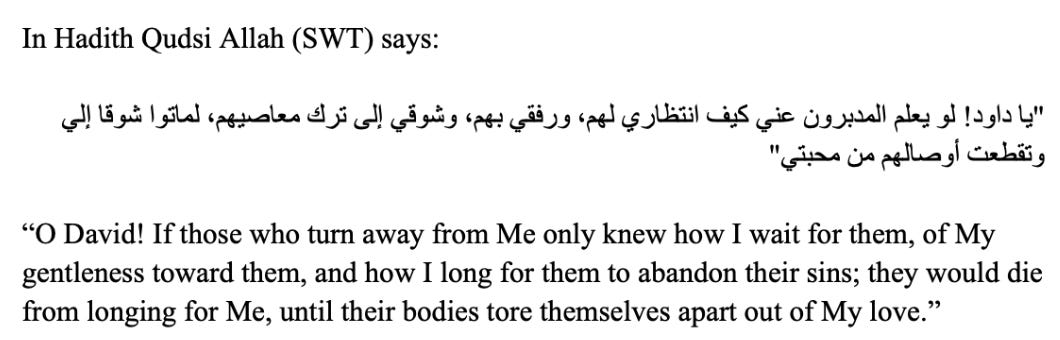
He seems so tender, so sweet. In the posture of a lover waiting by the phone for His beloved to call. He “waits” for me, He “longs” for me, and I have done nothing but misread Him. I have measured His patience by my own, assumed His justice must mirror my judgment, and imagined His mercy is bound by the limits of my own forgiveness. I have made Him accountable to the very weaknesses that plague me. I have humanised Him because all I have ever known is human. I have loved and betrayed only creatures of flesh and fault. Between me and the divine lie thousands of suspended layers of fabric, stacked threads and linens woven from my deficiencies, my limitations, my blindness. I am left only to peel back layer by layer until perhaps I catch a glimpse of what is not human in Him. And begin to understand mercy beyond measure.
This is a devastatingly honest confession of how easily we turn guilt into theology and call it humility. What strikes me most is the recognition that the real distortion isn’t doubting God’s existence but shrinking His mercy to the size of our own emotional limits. You name something many of us do quietly: we humanize God not to draw nearer to Him, but to make our fear feel reasonable. And in doing so, we end up worshiping a god who keeps score, sulks, and withdraws—because that’s what we do. The closing image of peeling back layers until mercy beyond measure becomes imaginable feels exactly right: repentance isn’t convincing God to forgive us again, it’s relearning who He actually is. This reads less like self-accusation and more like the beginning of freedom. https://theeternalnowmm.substack.com/p/seeing-clearly-lenses-history-and?r=71z4jh
What a profound and heartfelt reflection, Zahra thank you for writing this! I find that I have made the same mistake sometimes of imparting to Allah SWT my faults and what I believe would constitute Him withholding His infinite mercy. Then, I see the verse you included and think, how foolish could I have been to believe that the lord of the heavens and the earth and all creation could be anything like a flawed, imperfect being such as me.
It is important to remember that He is beyond our capacity to understand, but in the best way, and that His mercy is infinite, and that all we can do is have the highest opinion of Him, despite what life and circumstances may lead us to feel.