


The primary ambition of the collective West has historically been to acquire and accumulate. Western governments and previously empires have been infamously imperialistic: colonising and expanding borders, mining foreign gold and raw materials, accumulating and controlling the wealth of others through tariffs and sanctions. This ethos is reflected on a smaller social level: we spend our days chasing income, climbing corporate ladders, upgrading possessions, likes and follows, qualifications, and credentials. We work to get, we buy to feel, we scroll to consume. Life often feels as though it has become a checklist of things to acquire, and somewhere along the way, we start measuring and valuing ourselves by what we own rather than who we are.
This measure of value represents a fundamental difference between Western and Eastern philosophies. Perhaps a re-evaluation of our ethos is needed. Do we live to have, or do we live to become?
To Have
In the mode of having, a person defines themselves by what they own. This includes material goods: houses, cars, clothes, but also extends to less tangible things: opinions, beliefs, achievements, status, relationships. The self becomes an inventory of possessions and roles. “I am what I have” is the silent mantra.
This orientation finds a powerful cultural ally in the individualistic and capitalistic values of the modern West. From early life, individuals in such societies are conditioned to pursue success as a personal conquest: to distinguish, to excel, to win. Identity is not communal; it is competitive. The goal is not harmony but dominance; over the market, over others, over uncertainty. Capitalist ideology, at its psychological core, incentivises acquisition. Ownership becomes synonymous with power, with security, with self-worth. Life is viewed through a transactional lens: time is money, relationships are investments, and success is visible, quantifiable, and often flaunted. The economy is not just a system; it becomes a spiritual framework where salvation is found through consumption.
In this worldview, the human being is reimagined as a consumer, a competitor, a self-contained unit of production and desire. Ambition is valorised, and limits, whether ecological, emotional, or ethical, are often seen as obstacles to overcome. The internal world shrinks, while the external world becomes a showroom of identity.
The psychological cost of this model is subtle but profound. Anxiety, envy, loneliness, and a persistent sense of emptiness haunt those whose selfhood is tied to what they have. The fear of losing possessions, be they material or symbolic, becomes existential. Even love is distorted: it becomes attachment, not connection; control, not mutual flourishing. People no longer ask who they are, but what they are worth, and the answer often comes with a price tag.
To Become
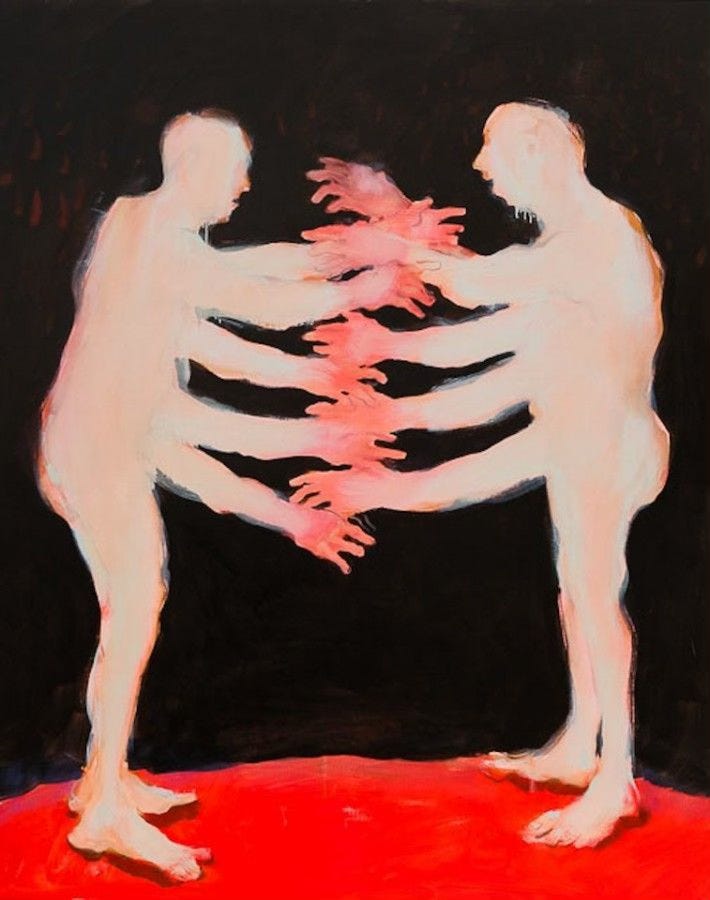
The mode of being offers a radically different orientation, one deeply rooted in Eastern collectivist philosophies and spiritual traditions. Here, the essence of life is not in possession, but in presence. To live is to act, to engage, to express, and to relate. In contrast to the Western focus on the individual ego, many Eastern traditions view the self as interconnected, fluid, and impermanent. In Buddhism, the idea of anatta (non-self) challenges the very notion of an isolated, fixed identity. In Taoism, the ideal is not mastery, but harmony with the flow of life. In Islam, the goal is to move the self closer to the divine in character and temperament. In Confucianism, the self is defined not by inner conquest but by one's relationships and moral responsibilities within the social order.
These traditions emphasise being over having by prioritising experience, humility, and the collective good. The goal is not to compete with others, but to integrate with them. Wisdom comes not from accumulating knowledge but from emptying the mind of illusions. Happiness is not sought in distant goals but discovered in everyday awareness. The family, the community, the natural world; these are not obstacles to personal freedom but essential components of being fully human.
From a psychological standpoint, the being mode nurtures empathy and psychological resilience. It teaches people to let go not only of material things but of the compulsion to define themselves by rigid categories. Success is measured not by ownership but by integrity of presence, how one shows up in the world, how deeply one connects, how gracefully one accepts impermanence. In these cultures, the collective often takes precedence over the individual, not out of oppression, but out of a deep understanding that the self is never truly separate. The child is seen as a part of a family line, the worker as part of a social organism, the soul as a drop in the ocean of being. This doesn’t erase individuality, it contextualises it.
Even the language used in collectivist societies reflects this shift. Personal pronouns are often less emphasised. Success is described in communal terms. Well-being is not measured in personal gain but in social harmony. This worldview encourages a slower, more contemplative life. Less about owning the world and more about belonging to it.
It is truly a fascinating question: to have or to be?
I don’t want to offer a personal prescription for how anyone should live, but I do believe we need a more honest reckoning with what we in the West, even on an individual scale, have come to value most. Would the West be where it is now (complicit in active genocide) if it could answer that question differently? How different could the world look? The pursuit of having, of owning, accumulating, and controlling has shaped our borders, our societies, our relationships, and even our inner lives. And while it’s brought comfort, progress, and power, it has also left many of us traumatised, displaced, depressed, disconnected, and searching.
Food for thought.
References
Fromm, Erich. To Have or To Be? Harper & Row, 1976.
Fromm, Erich. The Art of Loving. Harper Perennial, 1956.
Maslow, Abraham H. Motivation and Personality. Harper & Row, 1954.
Lao Tzu. Tao Te Ching. Translated by Stephen Mitchell, Harper Perennial, 1988.
Buddha. The Dhammapada. Translated by Eknath Easwaran, Nilgiri Press, 1985.
Confucius. The Analects. Translated by Arthur Waley, Vintage Books, 1989.
Horney, Karen. Neurosis and Human Growth: The Struggle Toward Self-Realization. Norton, 1950.
Bauman, Zygmunt. Consuming Life. Polity Press, 2007.
Nhat Hanh, Thich. The Art of Living: Peace and Freedom in the Here and Now. HarperOne, 2017.
Sennett, Richard. The Fall of Public Man. W.W. Norton, 1977.
Jung, Carl. Modern Man in Search of a Soul. Harcourt, 1933.
Taylor, Charles. The Ethics of Authenticity. Harvard University Press, 1991.


Zahra, you might be one of my favorite living writers.
This was an incredible and profound reflection Zahra, well done! I think one challenge for people from Eastern countries of origin residing in the west, is as you said, the clash between the collectivist, one-for-all approach of their countries of origin vs the individualist, consumption and material success driven view of their adoptive countries, which may have been all they have known since they grew up there.
I do think the Eastern, collectivist view of defining oneself by their presence and how they serve the common good and interests of their family/society/culture is healthier than the possession-driven, consumerist mentality of capitalism. In the modern world of social interconnectedness with the internet, smartphones, and social media, I think the detrimental and corrosive effects of being driven solely to acquire material possessions, to sacrifice the collective welfare in order to maximize one's pleasure and ephemeral happiness are magnified.
Is there one overarching, infallible, foolproof worldview? Not necessarily, but I do think that the capitalist mindset/worldview creates an unhealthy relationship between one's net worth/how much new, shiny technology, cars, fancy homes, money etc they have and their self-esteem. If there was some way to disrupt the reiteration of this mentality by the media and popular society, I think it could help people live more fulfilling, contented lives. Perhaps this is why some find that after living in countries where the collective good is emphasized, or even learning more about these nations and their philosophies, people start to reconsider their priorities and focus in life.