

The Guest House — مهمانخانه
Rumi's Poetic & Psychological Masterpiece

Every so often, I return to Jallaludin Rumi’s The Guest House — مهمانخانه, and each time, I find that it offers me something new. I’ll let his words speak to you before I share my own.
This body is a guest house.
Every morning comes a new arrival.
هست مهمان خانه اين تن اى جوان
A joy, a depression, a hostility,
some fleeting awareness comes
dressed as an unexpected visitor.
هر صباحى ضيف نو آيد دوان
Welcome them all!
Even if they’re a mob of sorrows,
who violently sweep your house
empty of its furniture,
still, treat each guest honorably.
هين مكو كين ماند اندر كَردنم
He may be clearing you out
for some new delight.
كه هم اكنون باز پرد در عدم
The dark thought, the shame, the malice,
meet them at the door laughing,
and invite them in.
هرجه آيد از جهان غيب وش
Be grateful for whoever comes,
because each guest has been sent
as a guide from beyond.
در دلت ضيفست او را دار خوش
Beautiful. Rumi suggests that the heart, like a house, is not meant to remain empty. It is shaped & changed by the echoes of those who enter, softened by their presence, and transformed by their departure. To reject or repress emotion is to deny an aspect of oneself, which, as we now know, often leads to internal fragmentation. Emotion, by its very nature, demands recognition; it does not disappear when ignored but instead manifests in subtler, more insidious ways. “He may be clearing you out for some new delight.” Hardship often precedes transformation.
This reminds me of the psychological concept of radical acceptance, the idea that suffering intensifies when we resist it. Instead of treating negative emotions as something to escape, try to approach them with curiosity. Often, the hardest emotions have been the ones that led me to the greatest growth. By welcoming emotions as guests rather than as intruders, and as temporary rather than indefinite, a person can cultivate the receptive psychological state that is necessary for transformation. Suffering is no longer an obstacle but a passage, an experience that, when integrated, deepens one’s understanding of the self.
Our natural resistance to painful emotions is not a fault. It stems from a very instinctive aversion to suffering that human beings have relied on for survival for thousands of years. Yet this avoidance creates a paradox: the more we suppress emotion, the more it lingers in the psyche, seeking expression in unintended ways. Rumi’s wisdom in The Guest House lies in the recognition that by willingly embracing even the most unwelcome of feelings, you disarm their potential to control and distort perception.
This approach to emotion is characteristic to the 13th & 14th Century Persian literature. The Islamic mystics and philosophers’ attitude to human psychology was fundamentally different to the attitude today. Rumi and his peers shared the ethos that suffering cannot be avoided—pain in this life is a given—and thus, the task is to find meaning in the suffering such that it becomes tolerable. If pain is understood as an inevitable, and even necessary, aspect of human experience, it ceases to be something to fear. Instead, it becomes a means of expansion, a force that can refine and reshape consciousness. The self, then, is not a rigid entity but a dynamic space—a “guest house” that is continuously inhabited by different states of being. True psychological well-being does not arise from eliminating negative emotions but from engaging with them to process them, and allowing them to pass through without resistance or attachment.
Rumi’s vision in The Guest House is ultimately one of psychological liberation.
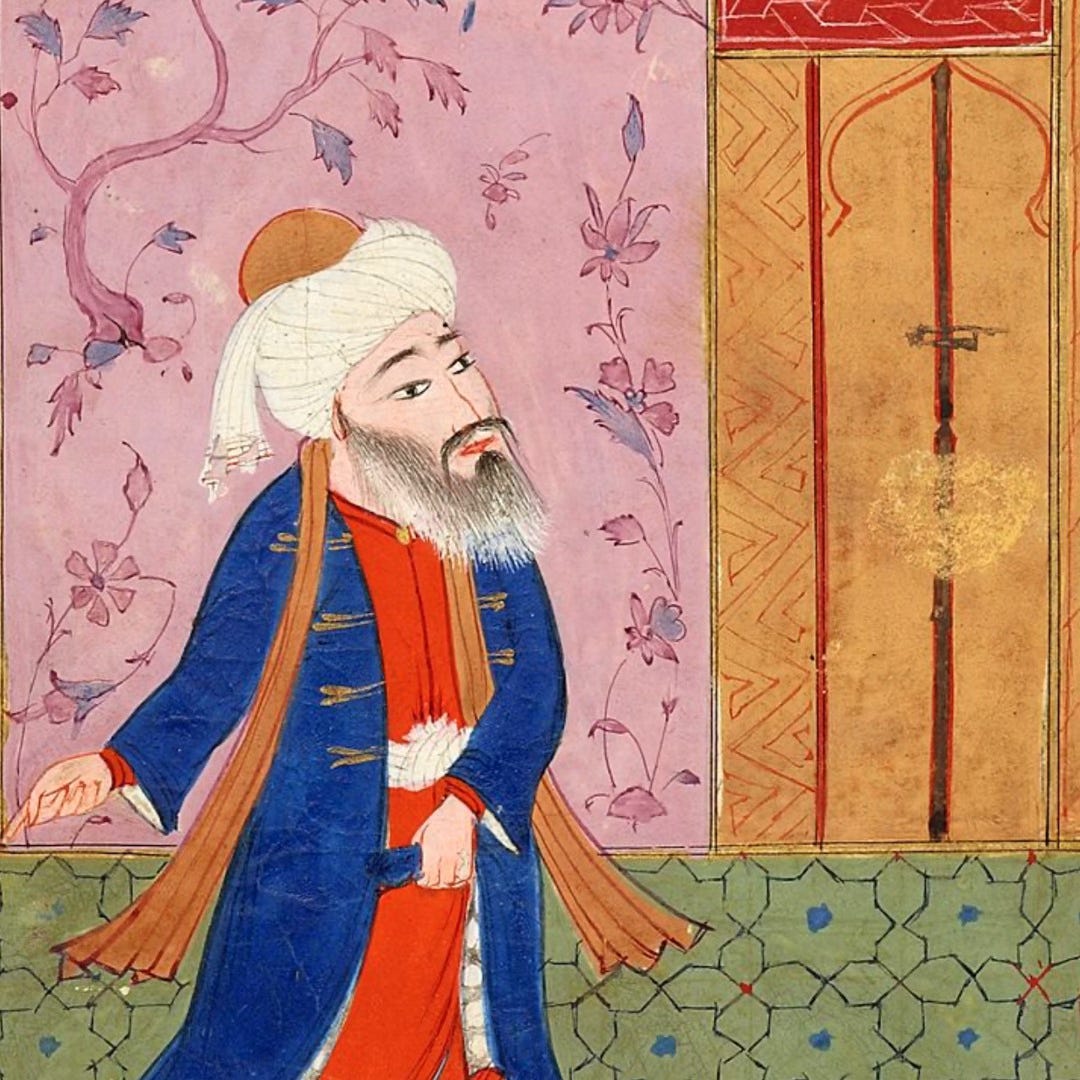
Rumi artfully articulated the human experience in a nutshell. I agree with his view that hardship and suffering are an inevitable and natural part of life, but if we do our best not to resist them when they are present, and instead learn from them, they can become positively transformative for us. I know for myself, personally, that experiencing suffering, like seeing the pain and trauma others are going through, getting a physical injury, or losing a loved one, can be the worst thing to endure, but shifting my view and realizing that something good can be found even in these dark and turbulent times (the proverbial silver lining if you will) provides a measure of hope. Certainly, as Rumi states, not all those who occupy the guest house are necessarily pleasant or welcome, but neither are they permanent visitors. We can only do our best to learn from these guests, enjoy the company of the agreeable ones, and learn from the otherwise unwelcome ones.
Mawlana Rumi is my favourite. Wow 😍