

The Depressing Pursuit of Happiness
Mental Health is Not The Absence of Emotional Pain or Suffering, It is The Ability to Live a Fulfilled Life Despite it

If you asked the average person today what the opposite of depression is, or what ultimate mental well-being looks like, the most common answer would likely be ‘happiness’. Ask them what they mean, or how they would define it and they might say ‘the absence of suffering’ or ‘the enjoyment of life’. Few ideals are as universally pursued, and as poorly understood, as the infamously elusive concept of happiness. Scroll through social media, browse the self-help aisle, or listen to a wellness podcast; consciously or unconsciously, we have come to believe that the purpose of life is to feel good. That discomfort signals dysfunction. That sadness requires fixing.
But if happiness is considered ‘health,’ what does that make grief, stress, anxiety, or failure? Is grief ‘ill-health’? Or is it simply part of the human condition? Isn’t struggle natural and inevitable? How plausible is it to enjoy life? Is unhappiness actually bad? What even is happiness?
Let us begin with a basic truth: emotional pain is inescapable.
Every life is marked by suffering. No matter how wealthy, loved, or socially fortunate we are, we will all face loss, fear, disappointment, rejection, and mortality. Struggle is a non-negotiable in life. To set the absence of pain as the ideal is to set ourselves up for chronic dissatisfaction. And yet this is precisely the model that dominates much of contemporary thinking about well-being.
The neoliberal modern wellness industry often frames mental health as a matter of mood regulation, life hacking, and lifestyle optimisation. But in doing so, it rarely engages with the deeper philosophical and spiritual dimensions of being human. It promises to eliminate pain without addressing its meaning. The result is an increasingly fragile inner life, where discomfort becomes pathologised and the tolerance for adversity (psychological resilience)diminishes.
This shift is not only a theoretical one, it is the symptom of a deeper cultural and ethical transformation.
The Culprit: Neoliberal Individualism
The collective West has long been driven by a desire to accumulate, first through colonial conquest and economic imperialism, and now through consumer capitalism. Wealth, resources, and influence were the spoils of nations. Today in the neoliberal West, these ambitions have trickled down to the individual level. Modern life is structured around the pursuit of more: more money, more success, more visibility, more comfort.
Mark Fisher, British cultural theorist and writer, has been steadfast in his portrayal of mental health issues as political & cultural rather than individual phenomena. In 2014 he wrote:
“Writing about one’s own depression is difficult. Depression is partly constituted by a sneering ‘inner’ voice which accuses you of self-indulgence - you aren’t depressed, you’re just feeling sorry for yourself, pull yourself together - and this voice is liable to be triggered by going public about the condition. Of course, this voice isn’t an ‘inner’ voice at all - it is the internalised expression of actual social forces, some of which have a vested interest in denying any connection between depression and politics.
Fisher was one of very few people writing about how if there are observable increases in markers of human suffering in a society (depression, suicides, drug addiction, PTSD etc) then we should look at what’s going on in society and change that instead of only ever throwing individualised ‘treatments’ at individuals (e.g psychopharmacology and psychotherapy). Psychotherapy can be transformative and enlivening, but it is not a substitute for political change. It does not develop a better political & cultural economic future for everyone. It does not eradicate social injustice.
Opinions on what is making society terrible will always conflict, but Fisher believed it was primarily neoliberal capitalism. More frequently referred to as ‘neoliberalism.’
Richard Schwartz (the creator of the Internal Family Systems branch of psychotherapy), in his book No Bad Parts: Healing Trauma and Restoring Wholeness with the Internal Family Systems Model, writes:
“We need a new paradigm that convincingly shows that humanity is inherently good and thoroughly interconnected… Such a change won’t be easy. Too many of our basic institutions are based on the dark view. Take, for example, neoliberalism, the economic philosophy of Milton Friedman that undergirds the kind of cutthroat capitalism that has dominated many countries, including the US, since the days of Ronald Reagan and Margaret Thatcher. Neoliberalism is based on the belief that people are basically selfish and, therefore, it’s everyone for themselves in a survival-of-the-fittest world. The government needs to get out of the way so the fittest can not only help us survive, but thrive. This economic philosophy has resulted in massive inequality as well as the disconnection and polarization among people that we experience so dramatically today. The time has come for a new view of human nature that releases the collaboration and caring that lives in our hearts.”
Psychiatrist and researcher Dr Anna Zeira published a comprehensive piece in the Community Mental Health journal in 2022, titled Mental Health challenges Related to Neoliberal Capitalism In The United States.

Dr. Zeira suggests that most mental health professionals have little to no understanding of neoliberalism, let alone its impact on psychological well-being, so she breaks down what neoliberal policies were starting in the 1980s:
Deregulation of big business and banks and corporate tax breaks
Introduction of practices that strongly favour employers over unions;
Transferring resources from public ownership to contracted out private sector services
Drastic budget cuts to the public sector
Elimination of various social programs
Deregulation of foreign investment rules for global 'trade liberalisation' leading to more international trade
Outsourcing manufacturing jobs overseas for the cheapest labor possible
Increase in government surveillance, policing, mass incarceration to deal with increases in poverty, crime, behavioural problems in society
To zoom in on the individual level, we now spend our days climbing professional ladders, curating online images, accumulating possessions, and benchmarking our worth against others. Life has become a performance, and identity a product. Somewhere along the way, we stopped asking who we are and started asking what we are worth.
This materialistic cultural framework is not neutral. It reshapes the values we associate with well-being and success. Historically, being a ‘good’ ethical person (someone with integrity, courage, or compassion) was a central aspiration. But today, material comfort, emotional positivity, and self-image have eclipsed moral development as the dominant goals of life.
Ethics, once seen as essential to personal and communal well-being, has been dismissed. In its place stands a new idol: comfort. Where people once sought to live rightly, many now seek simply to feel good. This abandonment of ethical development would have alarmed many of psychology’s foundational thinkers. To name just a few, Carl Jung, Abraham Maslow, and Carl Rogers, despite their differing approaches, all believed that authentic psychological health is inseparable from moral and ethical growth.
“The principal aim of therapy is not an impossible state of happiness, but to acquire steadfastness and philosophic patience in face of suffering. Behind a neurosis there is so often concealed all the natural and necessary suffering the patient has been unwilling to bear.” — Carl Jung, [Volume 16, Practice of Psychotherapy]
Ethics as Psychological Health
For Jung, the goal was not to eradicate suffering altogether but to find meaning in the suffering such that it becomes tolerable. He posited that psychological suffering often stemmed from the individual's refusal to confront and integrate the shadow: the repressed, denied, and morally complex parts of the self. Jung believed that individuation, or becoming whole, required a deep ethical confrontation with oneself. True mental health involves accepting responsibility for one's inner contradictions and finding a way to live truthfully and consciously in the world. He warned against modernity’s tendency to prioritise comfort over authenticity, arguing that avoiding the discomfort of moral introspection leads to a shallow and fragmented self:
“People will do anything, no matter how absurd, to avoid facing their own souls.” — Carl Jung
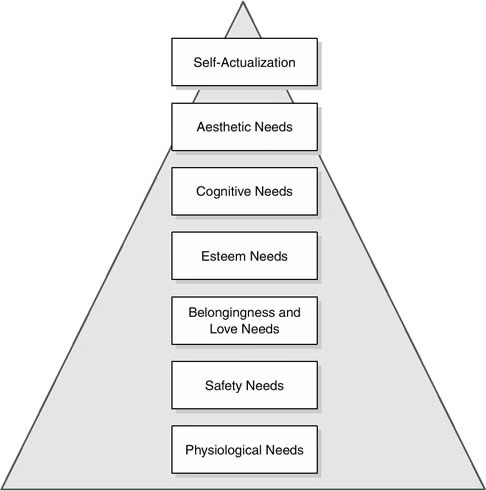
Maslow, known for his hierarchy of needs, placed self-actualisation (realising one’s full potential in service of something greater than the self) at the top. He defined self-actualising individuals as those deeply motivated by ethics, creativity, truth, and altruism. Maslow noted that people who were psychologically well were not those who felt happy all the time, but those who were committed to living with integrity, even at the cost of comfort or conventional success.
Similarly, Carl Rogers emphasised the relational concept of congruence: the alignment between one’s inner values and outer actions, as an absolute essential for mental health. For Rogers, the goal of psychotherapy was not to make the client ‘happy’ in the conventional sense, but to help them become more real, more responsible, and more connected to others. Ethical awareness and emotional openness were not optional; they were foundational.
All three recognised that the self cannot flourish in isolation, or in the absence of truth. They understood that well-being cannot be severed from the moral and relational dimensions of life. And they warned, either explicitly or implicitly, that the pursuit of superficial happiness, when unanchored from ethics, becomes a trap.
Not the Absence of Pain, But the Presence of Meaning
So what, then, is psychological health? It is not a permanent state of pleasure. It is not emotional invulnerability. And it is certainly not comfort at all costs. Sound mental health is the capacity to live a meaningful and engaged life, even in the face of suffering. It is resilience, grounded in purpose. It is connection, built through vulnerability. It is maturity, forged in ethical tension.
A psychologically whole person is not one who avoids pain, but one who through pain, deepens their character. They do not retreat from moral difficulty; they rise to it. They do not pursue only what feels good, but what is right, real, and necessary.
The modern pursuit of happiness, shaped by capitalism, individualism, and comfort, has led us away from something vital. We have traded the richness of moral struggle for the convenience of quick relief. We have mistaken pleasure for peace. We have redefined success as emotional ease rather than ethical strength. This redefinition is dangerous. It produces fragile selves, disconnected communities, and a hollow culture of self-promotion. We are more anxious, more medicated, and more disoriented than ever, not because we suffer, but because we no longer know what suffering is for or how to tolerate it.
We need a new definition of mental health, one that is actually very old. One rooted in the timeless truths that suffering can be meaningful, that ethics matter, and that selfhood is a soul to cultivate.


References:
Ehrenreich, B. (2009). Bright-sided: How the relentless promotion of positive thinking has undermined America. Metropolitan Books.
Fromm, E. (1976). To have or to be? Harper & Row.
Illouz, E. (2008). Saving the modern soul: Therapy, emotions, and the culture of self-help. University of California Press.
Jung, C. G. (1954). The practice of psychotherapy (Vol. 16, R. F. C. Hull, Trans.). Princeton University Press. (Original work published 1946)
Jung, C. G. (1961). Memories, dreams, reflections (A. Jaffé, Ed.; R. & C. Winston, Trans.). Pantheon Books.
Maslow, A. H. (1943). A theory of human motivation. Psychological Review, 50(4), 370–396. https://doi.org/10.1037/h0054346
Maslow, A. H. (1971). The farther reaches of human nature. Viking Press.
Rogers, C. R. (1961). On becoming a person: A therapist’s view of psychotherapy. Houghton Mifflin.
Taylor, C. (1989). Sources of the self: The making of the modern identity. Harvard University Press.
Such an important distinction. I am a therapist myself. The more and more I do this work the more I come to believe that sitting in discomfort and facing, it is the healthiest way to move through life.If you have time and interest would love for you to check out my work, I have found it very interesting and helpful to connect with other
You always inspire me to have an hour-long session, if not two, of deep introspection of 'self', not just from psychological point but from spiritual, Islamic lens as well.