

Deconstructing Sadism: Case Studies from Gaza and Iraq
How Systemic and Ideological Ethnosupremacy Forces Sadism to Rear its Ugly Head

Sadism takes its name from the 18th-century Marquis de Sade, whose writings glorified cruelty as a source of erotic and intimately psychological pleasure. The sadistic temperament is distinguished from its ugly siblings (psychopathy, machiavellianism, and narcissism) in that it is playful in essence. The sadist manufactures pain for his own amusement, for his own delight. To hurt another person and to witness the squirms and squeals of pain as a direct result of their own actions is a joyous endeavour to a sadist. It is perverted in every sense of the word. The precise psychological mechanisms that underly sadism are unknown. Some say it is born out of insecurity and early degradation, others say it can be a psychosocial result of incessant external reinforcement. However, the conditions necessary for one to become sadistic are agreed upon: the sadist has an unrestrained sense of superiority so large that it renders ‘the other’ utterly worthless.
We have been conditioned to define sadism as an unfortunate condition confined to the individual malfunctioning minds of Jeffrey Dahmer, Ted Bundy, and Albert Fish. Society has damned the individuals but reasoned with the condition. The reality that sadism is only a short spiritual plunge down into the Inferno is too terrifying to cope with. Well that reality became abundantly clear for me over the last 469 days. There are societies and ideologies among us that not only normalise, but reward the dehumanisation that forms the most fertile grounds for sadism to thrive.
The IDF in Gaza
I wonder where Dante would place the Israeli Defence Forces (IDF) in his Inferno. I have never seen acts of sadism so blatant en masse as I did in the reports of IDF activity in Gaza. I saw soldiers gathering from far to watch bombs the size of tanks fall on civilian homes as if it were a fireworks display. I saw soldiers wearing the lingerie of dead Palestinian women stolen from their homes. I saw the countless bullets extracted from children’s brains after they were sniped in hospital courtyards. What is most chilling in these reports is the capacity, in a war-zone, for play. The IDF, presumably, have strategic military aims, and yet there is a temptation from the soldiers to exhaust resources (sponsored by US taxpayer money) on perverted gameplay. The IDF soldiers indulge in the torture, torment, and they delight in the suffering of the Palestinians, for their own amusement. I am stressing this point because that is what most essentially defines it as sadism. The unnecessary yet irresistible inclination to torment and inflict pain on your victim. Group acts of sadism such as these do not arise in a vacuum. They are symptomatic of an ethnosupremist culture that systematically rewards sadistic rhetoric towards a specific demographic. Palestinians have been reduced to targets and playthings in the collective consciousness of Israeli society.

The psychology behind such cruelty is rooted in dehumanisation, which strips away the victim’s personhood, making their suffering seem inconsequential—or in this case pleasurable. When Palestinians are framed as subhuman or inherently threatening, soldiers can rationalise their actions as not only acceptable but necessary. The cultural narratives in Israeli society reinforce this dynamic. Propaganda and institutional impunity create an ecosystem where violence against Palestinians is not just tolerated but valorised; it is an experience to be had, an opportunity of a lifetime. Sadism in this context is not a personal failing; it’s a byproduct of an environment built around and founded on dehumanisation.
The group dynamics of the military further exacerbate this. Within the hierarchical and insulated structure of the IDF, sadistic behaviours often become bonding rituals. Soldiers are celebrated, not reprimanded, for cruelty. Acts of brutal military violence are transformed into acts of camaraderie. The collective validation ensures that sadism is perpetuated and embedded into the system that upholds it—a vicious feedback loop.
US Guards in Abu Ghraib Prison
The abuses at Abu Ghraib prison during the Iraq War offer another grotesque example of sadism granted social permission by systemic dehumanisation. In 2003-2004 it was revealed that American soldiers subjected the thousands of unconvicted Iraqi detainees to mock executions, molestation & rape, forced nudity, and other forms of psychosexual degradation, with photos documenting their cruelty. Like the IDF example, these acts were not isolated incidents. They were the predictable outcome of a propaganda-induced ethnosupremist attitude and unchecked power.
In the “war on terror,” Iraqis were portrayed by mainstream media and the film industry as less than human, barbarians to be subdued, terrorists to be broken. This narrative fuelled a culture of supremacy, where cruelty towards such backwards creatures was reframed as a form of justice and even a source of pride. The soldiers at Abu Ghraib were operating within this narrative, internalising it until it warped their sense of morality entirely. Psychologically, this dynamic is consistent with the findings of experiments like the Stanford Prison Study. When given unchecked authority over others, people often resort to cruelty.
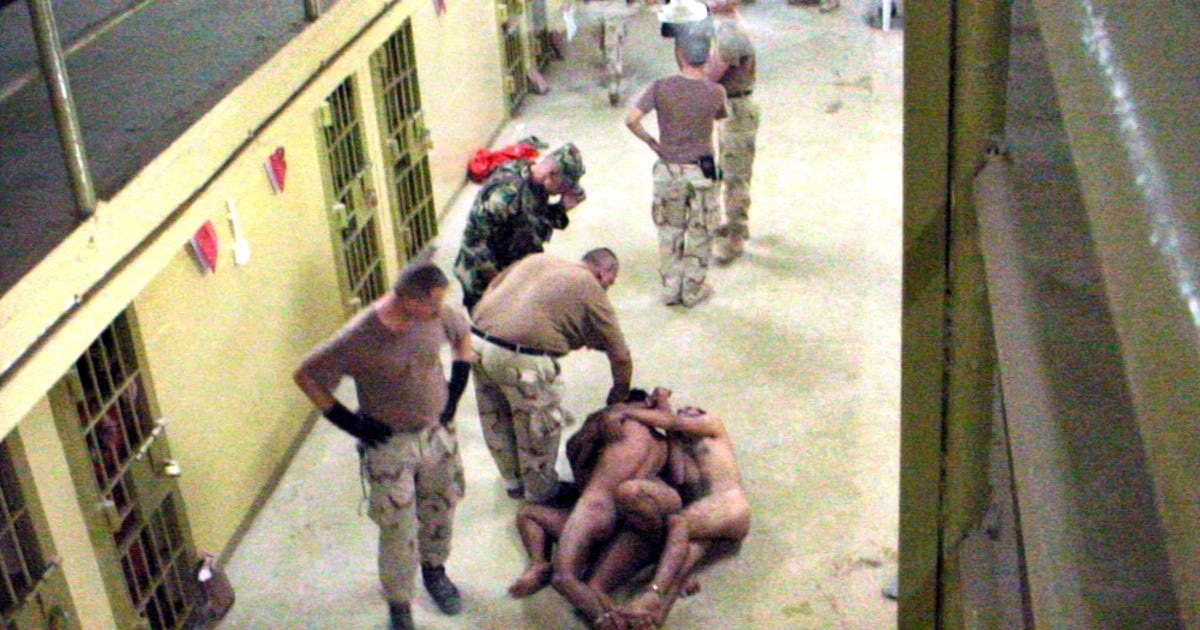
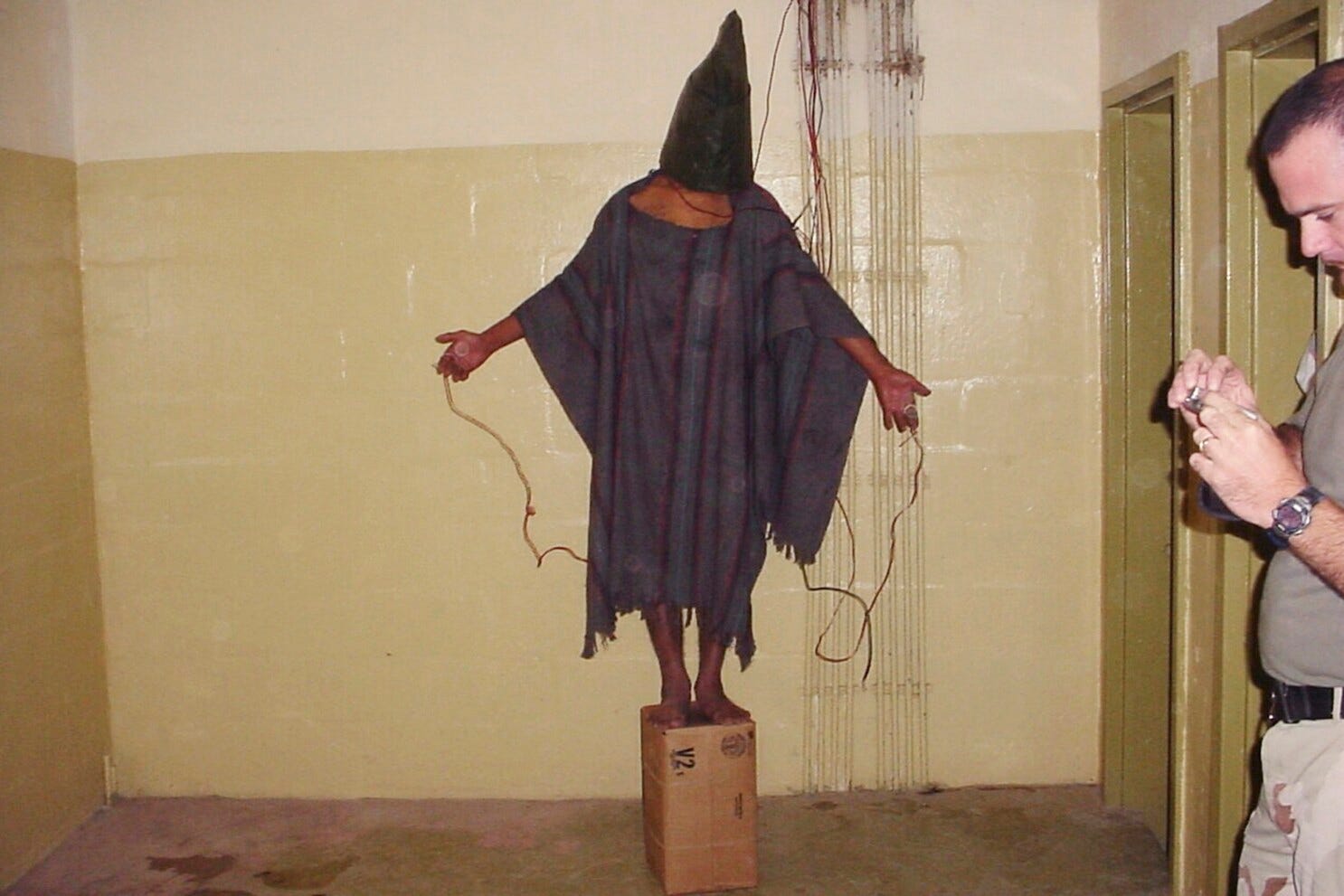
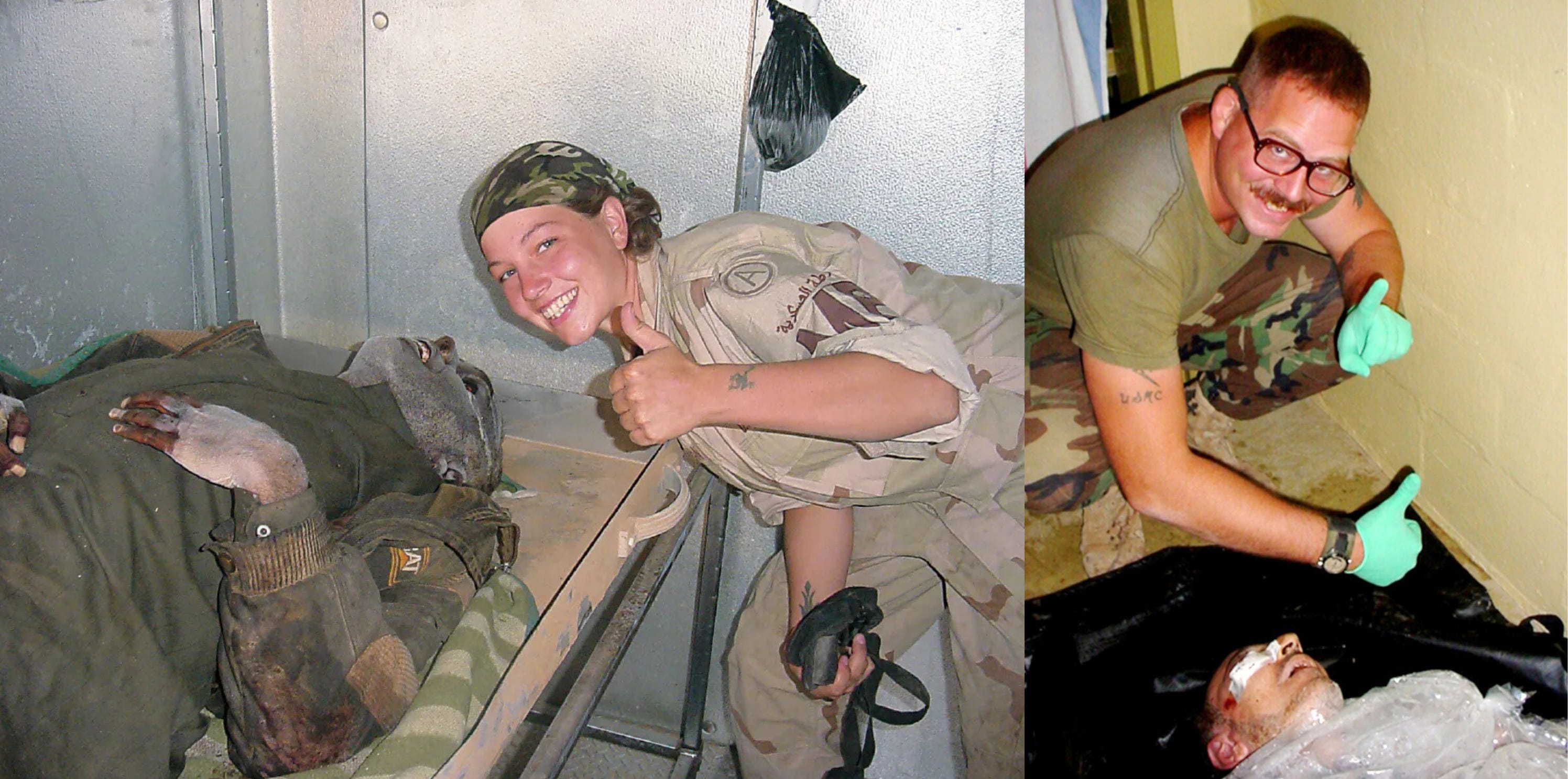
It’s important to note that sadism in these contexts often masquerades as duty. Soldiers, after the fact, claim they were “just following orders,” but the glee and pleasure derived from humiliation, evident in their recorded actions and expressions, expose the truth. War is always ugly; it is one of the ugliest things to behold as a human. Far far uglier, however, is to witness the utter delight on the face of a sadist after they have reduced a fellow human to a lifeless and bloodied corpse. The devastating reality of Abu Ghraib was not simply due to bad-faith geopolitical agenda or an abuse of power; it was the grins and smiles, the joy and delight, that shook us to the core.
Perhaps the most terrifying aspect of sadism is its accessibility. It hides in plain sight, where cultural and systemic forces validate fascist rhetoric and smaller acts of cruelty as normal, necessary, or even noble. It is not the distant anomaly we assume it is, but a near potential. To truly reckon with sadism is not just to condemn its manifestations but to introspectively and extrospectively interrogate the conditions, cultural, ideological, and psychological, that allow it to thrive.

Really, no lies told. This is a fantastic dissection of the psychology of the war criminal. What’s special is that it locates that Sadism within the individual. it reckons with the genesis of that’s sadism. The question to ask ourselves is, how do we check our worst impulses in an environment that incentivises them.
Excellent piece of work, this just demonstrate how the human being can't learn from his past. We ultimately do the same think or even worse. These are the articles that should be reposted the most